
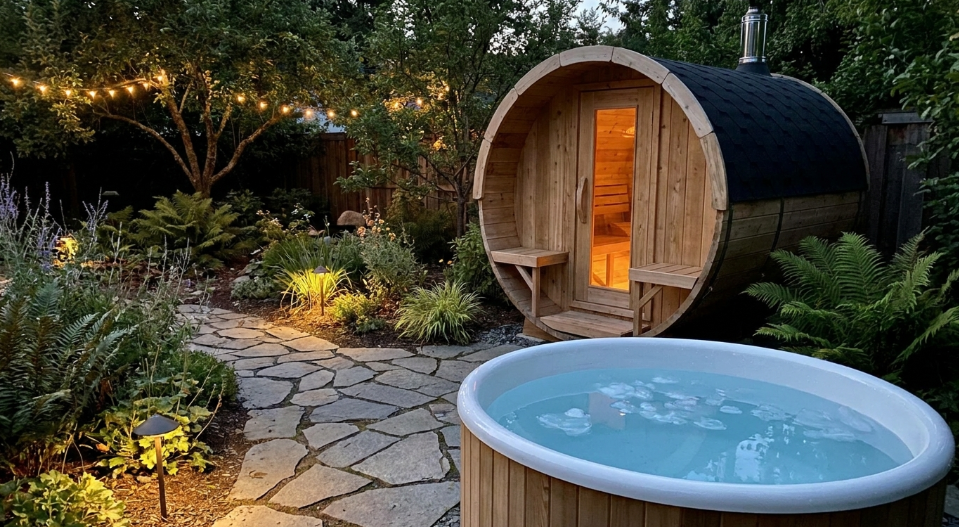

A DIY kit makes sense for a plug-in infrared cabin or a small traditional kit under roughly 6 kilowatts, where two people can complete assembly in a weekend and save $1,500 to $3,000 in labor. Professional installation is the better call for anything requiring a dedicated 240-volt circuit, a poured pad, or a heater above 6 kilowatts, since that work typically must be done by a licensed electrician regardless of who assembles the wood shell. Most buyers end up somewhere in between: DIY assembly of the cabin itself, paired with a licensed electrician for the final hookup.
How Much Does a DIY Kit Save Compared to Pro Install?
The savings depend heavily on what “install” includes. Assembling the wood shell yourself, walls, roof panels, benches, and trim, typically saves $1,000 to $2,000 versus paying a carpentry crew for the same work. But the heater hookup is a separate line item either way, since most traditional heaters above 6 kilowatts need a dedicated 240-volt circuit that a homeowner cannot legally run in most jurisdictions without an electrician’s license. Once that electrical cost is factored in, a fully DIY project usually nets $1,500 to $3,000 in real savings, not the full install price some kit marketing implies.
What Skills and Tools Does a DIY Kit Actually Require?
Kit assembly is closer to building a large piece of flat-pack furniture than framing a structure from scratch, since panels arrive pre-cut and pre-drilled with tongue-and-groove edges that lock together. A cordless drill, a level, a rubber mallet for seating panels, and a stepladder cover most of what is needed. The panels themselves are heavier than they look, roof sections especially, so two people working together finish in a weekend where one person working alone can take 3 to 5 days. Squaring the base correctly on day one matters more than any other step, since a shell that starts out of square makes every following panel harder to seat cleanly.
When Does Professional Installation Make More Sense?
Anything beyond a small plug-in unit shifts the calculation. A heater over 6 kilowatts, an outdoor cabin needing a poured concrete pad or footings, or a site with an uneven grade all benefit from a crew that installs saunas regularly and can spot problems, like a slightly sloped base or a wall that is not plumb, before they become permanent. Professional installers also typically warranty their own labor separately from the manufacturer’s parts warranty, which gives you a second layer of recourse if something goes wrong in year one. For a first-time buyer without carpentry experience, the time saved and the reduced risk of a costly mistake often justifies the extra $1,000 to $2,000 in labor.
What Electrical Work Can, and Cannot, a Homeowner Do?
This is where DIY ambition meets a hard legal line in most places. Plugging in a small infrared cabin rated under 1,500 watts into a standard household outlet is genuinely something most homeowners can do themselves. Anything requiring a new 240-volt circuit, which covers the majority of traditional heaters over 6 kilowatts, needs a permit and a licensed electrician in most jurisdictions, both for code compliance and because an amateur wiring job on a high-heat appliance is a real fire risk. Sellers with detailed specification sheets, including where shoppers can view current pricing against heater wattage and required circuit size, make it easier to plan this cost correctly before ordering rather than discovering it after the kit arrives.
How Long Does Each Approach Actually Take?
A DIY weekend project is realistic for a small kit with two people and no major site prep needed. Add a poured pad, and the timeline stretches to 2 to 3 weeks once you account for curing time before the cabin can sit on it. A professional install of a mid-size traditional cabin, including a pad, electrical rough-in, and assembly, typically runs 1 to 2 weeks from delivery to first use, mostly limited by scheduling the electrician rather than the physical build itself. Buyers in a hurry for a specific date, a holiday, a milestone birthday, should build in at least 3 weeks of buffer regardless of which route they choose.
What Does the Evidence Say About Using a Sauna Regularly Once It Is Built?
Whichever installation path you take, the payoff depends on actually using the cabin often, and the research on that point is fairly consistent. A large Finnish cohort study found men who used a sauna four to seven times weekly had lower rates of fatal cardiovascular events than men who used one once a week, an association that held after adjusting for other factors. A systematic review in Evidence-Based Complementary and Alternative Medicine reached similar conclusions about regular dry sauna bathing, and a separate review in the American Journal of Physiology examined the physiological effects of heat exposure more broadly. These are associations drawn mostly from Finnish cohorts, not guarantees for any individual, but they are a reasonable argument for choosing whichever install method gets the cabin usable soonest and most reliably.
What Mistakes Do First-Time DIY Kit Builders Make Most Often?
The single most common error is not squaring and leveling the base before the first wall panel goes up, since even a small out-of-level start compounds by the time the roof sections need to meet cleanly, sometimes forcing gaps that have to be shimmed or caulked later. A close second is under-reading the manual before starting; kit instructions typically specify a panel order for a reason, since certain wall sections lock adjoining panels in place and going out of sequence can mean partially disassembling a finished wall to fix a mistake two steps back. Builders also frequently underestimate how much moving heavy roof panels alone slows the project, which is the main argument for recruiting a second person even for a kit marketed as a solo build. Finally, some buyers skip a level test on the finished floor before installing benches, which later shows up as a bench that rocks slightly or a door that binds against the frame.
How Do You Decide Which Approach Fits Your Situation?
The honest answer depends less on cost and more on three practical questions: whether you have a second person available for a full weekend, whether your site needs a poured pad or has an uneven grade, and whether the heater you want requires a new 240-volt circuit. A flat, prepared site with a small kit and two willing helpers leans DIY. An uneven yard, a heater above 6 kilowatts, or a tight timeline before a specific date leans professional. Many households land on a hybrid: assembling the shell themselves over a weekend to save labor cost, then paying an electrician for the final circuit and hookup, which captures most of the DIY savings without taking on the parts of the project that carry real code and safety consequences if done incorrectly.
Frequently Asked Questions
How much does a DIY sauna kit actually save? Typically $1,500 to $3,000 in labor compared with a full professional install, though the gap narrows once an electrician is paid for the 240-volt circuit most heaters need.
Can one person assemble a traditional sauna kit alone? It is possible but slow, since panels are heavy and easier to align with two people. Solo assembly often takes 3 to 5 days versus a weekend for two people.
Does a DIY install void the manufacturer warranty? Usually not for the frame and panels if instructions are followed, but heater and electrical warranties are often tied to licensed-electrician installation.
What tools does a DIY sauna kit require? A cordless drill, level, rubber mallet, stepladder, and basic hand tools cover most kits, with a circular saw needed occasionally for trim adjustments.
References
- Clinical Effects of Regular Dry Sauna Bathing: A Systematic Review, Evidence-Based Complementary and Alternative Medicine, 2018
- Effects of heat and cold on health, with special reference to Finnish sauna bathing, American Journal of Physiology – Regulatory, Integrative and Comparative Physiology, 2018
- Benefits and risks of sauna bathing, The American Journal of Medicine, 2001
